Journal / Print & Packaging
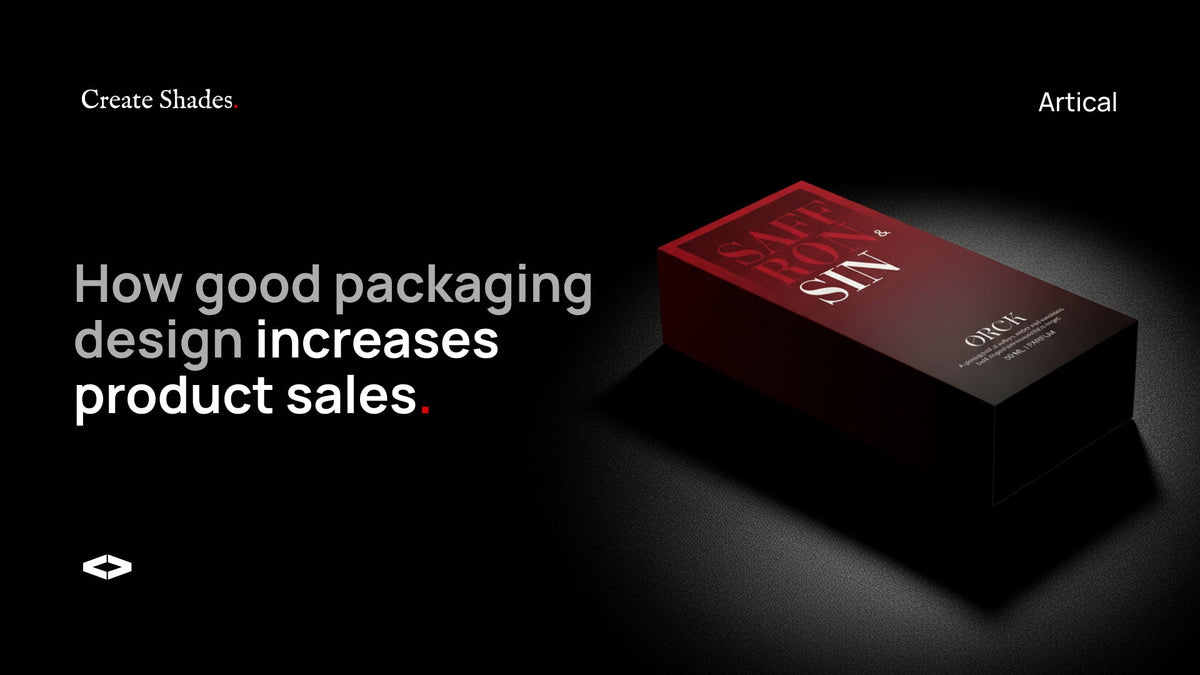
how good packaging design increases product sales.
More Than Just a Pretty Box
When most people think about packaging design, they imagine labels, colors, and attractive boxes. But packaging is much more than decoration—it's often the first interaction a customer has with your brand.
Before a customer experiences the quality of your product, they experience its packaging.
In today's crowded marketplace, where consumers are presented with hundreds of choices both online and offline, packaging can be the deciding factor between a product being picked up or passed over.
As a designer, I've seen businesses invest heavily in product development while treating packaging as an afterthought. Unfortunately, even exceptional products can struggle to sell when their packaging fails to communicate value, trust, or quality.
In this article, we'll explore how strategic packaging design directly influences purchasing decisions and contributes to higher sales.
The Psychology of Packaging
Humans make purchasing decisions emotionally before they justify them logically.
Studies consistently show that consumers form first impressions within seconds. Packaging acts as a silent salesperson, communicating your brand's personality, quality, and positioning without saying a word.
What customers subconsciously evaluate:
- Is this product trustworthy?
- Does it look premium?
- Is it worth the price?
- Does it align with my lifestyle?
- Does it feel modern and relevant?
For example, luxury fragrance brands often use minimal typography, high-quality materials, and refined color palettes to communicate exclusivity.
On the other hand, playful food brands may use bright colors and expressive illustrations to communicate fun and accessibility.
Every design decision influences perception.
Key takeaway:
People don't buy products.They buy what those products make them feel.
Shelf Impact: Winning the First Three Seconds
Imagine walking into a supermarket aisle.
You are surrounded by dozens of competing products.
Most customers don't spend minutes evaluating every option. Instead, they scan shelves quickly and stop only when something captures their attention.
This is where shelf impact becomes critical.
Effective packaging design helps a product:
- Stand out among competitors
- Be instantly recognizable
- Communicate its category clearly
- Create visual hierarchy
- Improve memorability
Strong shelf presence often includes:
- Clear typography
- Distinctive color systems
- Strategic use of whitespace
- Strong brand recognition
- Consistent visual identity
A product that stands out gains attention.
Attention creates curiosity.
Curiosity creates sales.
Why the Unboxing Experience Matters
The customer journey doesn't end after the purchase.
Today's consumers often share products on social media, recommend them to friends, and become repeat buyers based on their overall experience.
A thoughtful unboxing experience transforms a transaction into a memorable moment.
Consider what happens when a customer receives:
- Premium tissue paper
- Personalized thank-you notes
- Carefully arranged products
- Branded inserts
- Elegant packaging details
These small elements create emotional value.
In many cases, customers remember how a product made them feel more than the product itself. For direct-to-consumer brands, packaging is often the closest equivalent to an in-store experience.
Great packaging creates:
- Customer satisfaction
- Social sharing
- Repeat purchases
- Positive reviews
- Stronger brand loyalty
Common Packaging Design Mistakes
Many brands unintentionally reduce their product's perceived value through poor packaging decisions.
1. Too Much Information
Trying to communicate everything at once often creates confusion.
Good packaging prioritizes clarity.
2. Poor Typography
Difficult-to-read fonts reduce trust and professionalism.
3. Lack of Brand Consistency
When packaging looks disconnected from the website, social media, or advertising, customers experience a fragmented brand identity.
4. Following Trends Blindly
Trends fade quickly.
Strong branding is built on timeless design principles.
5. Designing for Yourself Instead of the Customer
Successful packaging focuses on the target audience's expectations, not the personal preferences of the business owner.
Real-World Examples of Packaging Driving Sales
Apple
Apple's packaging reflects the same simplicity and precision found in its products.
The unboxing experience reinforces the perception of quality and innovation.
Aesop
Aesop uses restrained typography, earthy colors, and premium materials to create a sophisticated brand identity that immediately communicates quality.
Luxury Fragrance Brands
Many successful fragrance brands use minimal packaging with premium finishes because simplicity often feels more expensive than visual clutter.
These brands understand that packaging isn't just a container.
It's part of the product itself.
Final Thoughts
Packaging design is one of the most powerful branding investments a business can make.
It influences first impressions, purchasing decisions, customer experience, and long-term brand perception.
Great packaging doesn't simply protect a product.
It tells a story.
It builds trust.
And most importantly, it helps products sell.
In a competitive market, thoughtful packaging design can be the difference between being noticed and being ignored.
Brands that understand this don't view packaging as an expense.
They view it as a growth tool.
Need Help Designing Packaging That Sells?
Whether you're launching a skincare line, fragrance brand, food product, or lifestyle business, strategic packaging design can elevate your product and strengthen your brand.
Explore my packaging design services and let's create packaging that not only looks beautiful—but performs.
need help designing something that sells.
Brands, packaging, campaigns and illustration: let's talk about your project.