Journal / Brand & Identity
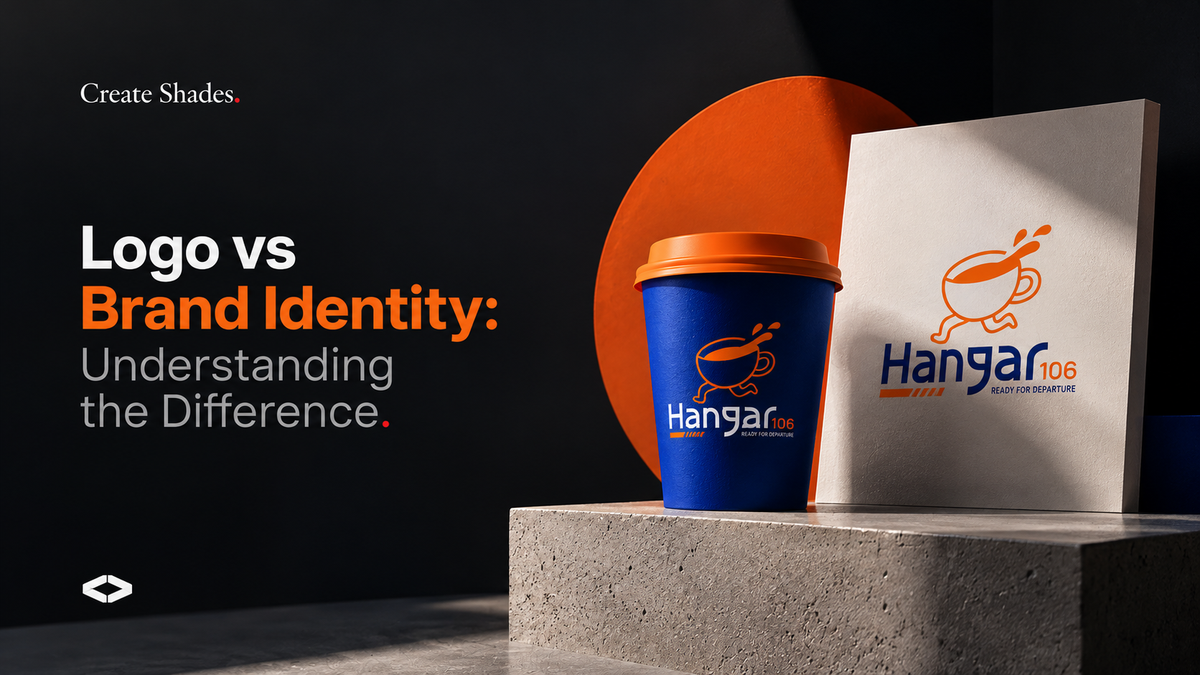
logo vs brand identity: understanding the difference.
Why a Beautiful Logo Alone Isn't Enough
One of the most common conversations I have with potential clients starts with a simple request:
"I just need a logo."
At first glance, it seems reasonable.
After all, a logo is often the first thing people associate with a brand.
But as the conversation continues, I usually discover that what they actually need is much more than a logo.
They need consistency.
They need recognition.
They need trust.
They need a brand identity.
This misunderstanding is incredibly common among startups, small businesses, and even established brands. Many people use the terms logo and brand identity interchangeably, but they serve very different purposes.
In this article, we'll explore what a logo actually does, what a brand identity includes, and why businesses need both to build a memorable and successful brand.
What Is a Logo?
A logo is a visual symbol that represents a business.
It's designed to help people recognize and remember a brand.
Think of it as a signature.
A logo can take many forms:
- Wordmarks (Google, Coca-Cola)
- Lettermarks (IBM, HBO)
- Symbols (Apple, Nike)
- Combination marks (Adidas, Burger King)
A logo's primary purpose is identification.
It helps people instantly recognize who they're interacting with.
However, a logo alone doesn't communicate the full personality of a brand.
Think of it this way:
A logo is your face.
But your brand identity is your entire personality.
What Is Brand Identity?
Brand identity is the complete visual system that shapes how people perceive a business.
It goes beyond a logo and creates consistency across every customer touchpoint.
A brand identity typically includes:
Visual Elements
- Logo system
- Color palette
- Typography
- Icons
- Patterns
- Imagery style
Communication Elements
- Tone of voice
- Messaging style
- Brand personality
Application Elements
- Packaging
- Website design
- Social media graphics
- Presentations
- Marketing materials
Together, these elements create a recognizable and memorable experience.
Example
Imagine seeing only Apple's logo.
You recognize it.
Now imagine the entire Apple experience:
- Minimal packaging
- Clean website
- Consistent typography
- Product photography
- Store design
That's brand identity.
The Key Difference
The easiest way to understand the difference is this:
Logo = Identification
Brand Identity = Experience
A logo helps people recognize your business.
A brand identity helps people remember it.
A logo tells people who you are.
A brand identity communicates what you stand for.
Without a strong identity system, even a beautiful logo can feel disconnected and forgettable.
Why This Difference Matters for Businesses
Many businesses invest heavily in logo design and then stop.
Unfortunately, this often creates inconsistent branding.
You may have:
- A professional logo
- Random social media posts
- Inconsistent colors
- Different fonts everywhere
- No visual direction
As a result, customers struggle to recognize and trust the brand.
Consistency is one of the biggest drivers of brand recognition.
The more consistent your visual identity is, the easier it becomes for customers to remember you.
Benefits of a strong brand identity:
- Increased trust
- Better recognition
- Professional appearance
- Higher perceived value
- Stronger customer loyalty
Brand identity transforms individual design assets into a cohesive system.
When Do You Need a Logo?
A logo alone may be enough if:
- You're testing a business idea.
- You're creating a temporary project.
- You have a very limited budget.
- You're not actively marketing your business.
At this stage, a simple logo can provide basic identification.
However, as your business grows, you'll quickly need a more complete system.
When Do You Need a Full Brand Identity?
A full brand identity becomes essential when:
- You're launching a product.
- You're building a long-term business.
- You're investing in marketing.
- You're creating packaging.
- You're running social media campaigns.
- You're building a website.
- You want to look professional and trustworthy.
If customers interact with your brand across multiple platforms, consistency becomes critical.
That's where brand identity creates real value.
Real-World Examples
Nike
Most people think of the famous swoosh.
But Nike's success isn't built solely on a logo.
It's built on:
- Bold photography
- Consistent messaging
- Strong typography
- Athletic storytelling
- Recognizable visual style
The swoosh is only one part of a much larger system.
Lesson:
Great brands are remembered because of their identity, not just their logo.
Apple
Apple's logo is simple.
What makes the brand feel premium is everything around it:
- Product design
- Packaging
- Website experience
- Retail stores
- Marketing
The logo identifies Apple.
The brand identity creates the experience.
Lesson:
Consistency creates premium perception.
Starbucks
The siren logo is recognizable.
But Starbucks' identity includes:
- Store interiors
- Packaging
- Seasonal campaigns
- Typography
- Brand voice
Together, these elements create a cohesive customer experience.
Lesson:
Customers remember systems, not isolated design elements.
Common Misconceptions
"My logo is my brand."
No.
Your logo is one part of your brand.
"A great logo guarantees success."
No.
A logo can't compensate for poor customer experience, weak positioning, or inconsistent branding.
"Brand identity is only for large companies."
No.
In fact, smaller businesses often benefit even more because strong branding helps them compete with larger players.
Final Thoughts
A logo is important.
It's often the first visual representation of your business.
But it isn't the entire brand.
A logo helps people recognize you.
A brand identity helps people remember you.
The most successful businesses don't rely on a single design asset.
They build complete visual systems that communicate their values, personality, and promise consistently across every customer interaction.
Because at the end of the day, people don't connect with logos.
They connect with experiences.
And brand identity is what shapes those experiences.
Looking Beyond Just a Logo?
If you're building a business and want more than a symbol, a thoughtful brand identity can help you create consistency, trust, and long-term recognition.
Explore my branding services to build a brand that's designed to grow with your business.
need help designing something that sells.
Brands, packaging, campaigns and illustration: let's talk about your project.