Journal / Brand & Identity
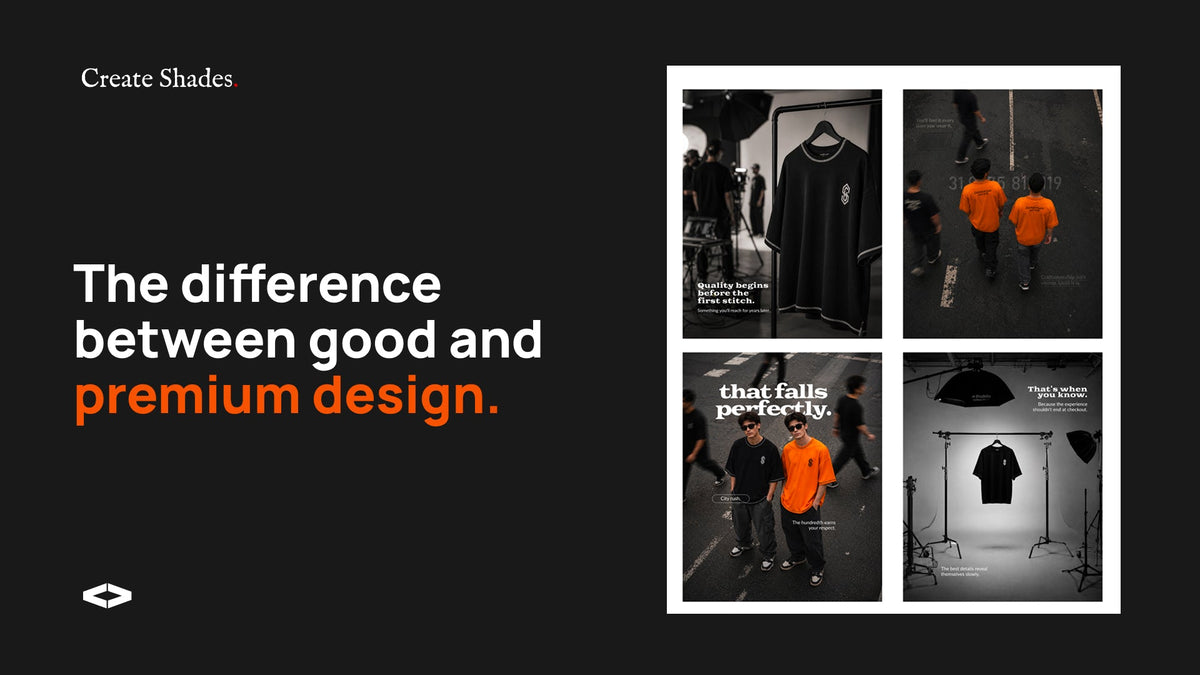
the difference between good and premium design.
Premium Isn't About Spending More—It's About Creating Perception
Many business owners assume that looking premium requires a large budget, expensive packaging, or a luxury product.
The reality is different.
Some brands spend millions on marketing and still look average, while others create a premium presence with thoughtful design decisions and a clear brand strategy.
In today's competitive market, customers often decide whether a brand feels trustworthy, professional, or high-quality within seconds. Before they read your reviews, compare your features, or understand your product, they judge how your brand looks and feels.
As a designer, I've noticed that the brands perceived as premium are rarely the ones trying the hardest to look expensive. Instead, they focus on clarity, consistency, and attention to detail.
In this article, I'll break down the key elements that make a brand look premium and how you can apply them to your own business.
First Impressions Matter
People form opinions incredibly fast.
Research suggests that users create an impression of a website or brand within a few seconds of seeing it.
That means your logo, website, packaging, social media presence, and marketing materials are all working together to create an immediate perception.
Signs of a premium first impression:
- Clean visual hierarchy
- Professional photography
- Clear messaging
- High-quality design assets
- Consistent branding
Think about brands like Apple.
Before customers understand the technology, they notice the simplicity, presentation, and attention to detail.
Premium brands understand that every visual touchpoint contributes to perception.
Practical takeaway:
Review your website, packaging, and social media as if you're seeing them for the first time.
Ask yourself:
"Would I trust this brand within five seconds?"
Consistency Builds Trust
One of the fastest ways to make a brand feel less premium is inconsistency.
Imagine visiting a luxury restaurant where the menu, interior, uniforms, and website all look completely different.
It would feel confusing.
The same principle applies to branding.
Premium brands maintain consistency across:
- Website
- Packaging
- Social media
- Advertisements
- Presentations
- Customer communication
Consistency creates familiarity.
Familiarity creates trust.
Trust increases sales.
Practical takeaway:
Create simple brand guidelines covering:
- Logo usage
- Color palette
- Typography
- Photography style
- Tone of voice
The goal isn't perfection.
The goal is recognition.
Typography and Whitespace: The Most Underrated Luxury Tools
Most business owners focus on logos and colors.
Designers often focus on typography and spacing.
Why?
Because premium brands rarely feel crowded.
Luxury is often associated with confidence, simplicity, and restraint.
That's why many premium brands use:
- Larger margins
- Fewer design elements
- Clean typography
- Strong visual hierarchy
- Plenty of breathing room
Look at brands like Aesop, COS, or Apple.
They don't try to fill every space.
Instead, they allow the design to breathe.
Practical takeaway:
If your website, packaging, or social media feels cluttered, try removing 20% of the content before adding anything new.
Often, less creates more impact.
Choosing a Premium Color Palette
Color has a powerful influence on perception.
While there is no single "luxury color," premium brands tend to use color intentionally rather than excessively.
Common premium color combinations include:
Black + White
Timeless, sophisticated, confident.
Beige + Cream + Warm Neutrals
Elegant, minimal, modern.
Deep Green + Gold
Luxury, heritage, exclusivity.
Navy + White
Professional, trustworthy, established.
Charcoal + Soft Gray
Refined and contemporary.
The goal isn't choosing trendy colors.
The goal is creating a cohesive visual system.
Practical takeaway:
Limit your brand palette to:
- 1 Primary Color
- 1 Secondary Color
- 2–3 Neutral Colors
Simple palettes often feel more premium than complex ones.
Premium Brands Focus on Details
The difference between a good brand and a premium brand is often found in the details.
Customers notice:
- Packaging quality
- Button spacing on websites
- Product photography
- Copywriting
- Customer service
- Presentation
These details may seem small individually.
Together, they shape perception.
Premium brands understand that every interaction contributes to the customer experience.
Real-World Examples
Apple
Apple's branding is built on simplicity, consistency, and exceptional attention to detail.
From packaging to retail stores, every touchpoint feels intentional.
Lesson:
Simplicity often feels more premium than complexity.
Aesop
Aesop combines minimal packaging, restrained typography, and thoughtful storytelling.
The result is a brand that feels sophisticated without being loud.
Lesson:
A strong visual system creates long-term recognition.
Rolex
Rolex focuses on consistency and heritage.
Its branding hasn't changed dramatically over time because trust is built through familiarity.
Lesson:
Premium brands evolve carefully rather than constantly chasing trends.
Common Mistakes That Make Brands Look Cheap
Using Too Many Fonts
Limit yourself to one or two typefaces.
Following Every Design Trend
Trends expire.
Strong branding lasts.
Inconsistent Visual Identity
Different colors, layouts, and styles create confusion.
Poor Photography
Even great products can appear low quality with weak visuals.
Overcrowded Design
Trying to communicate everything often communicates nothing.
Final Thoughts
A premium brand isn't created by adding more.
It's created by refining what already exists.
The brands that feel luxurious aren't necessarily the most expensive.
They're the most intentional.
By focusing on consistency, typography, spacing, color systems, and attention to detail, any business can create a stronger and more premium brand presence.
The goal isn't to look expensive.
The goal is to look trustworthy, memorable, and valuable.
And when you achieve that, customers naturally perceive your brand as premium.
Want to Elevate Your Brand?
Whether you're launching a new business or refreshing an existing one, thoughtful branding can completely transform how customers perceive your company.
Explore my branding services and let's build a brand that feels as premium as the experience you deliver.
need help designing something that sells.
Brands, packaging, campaigns and illustration: let's talk about your project.