
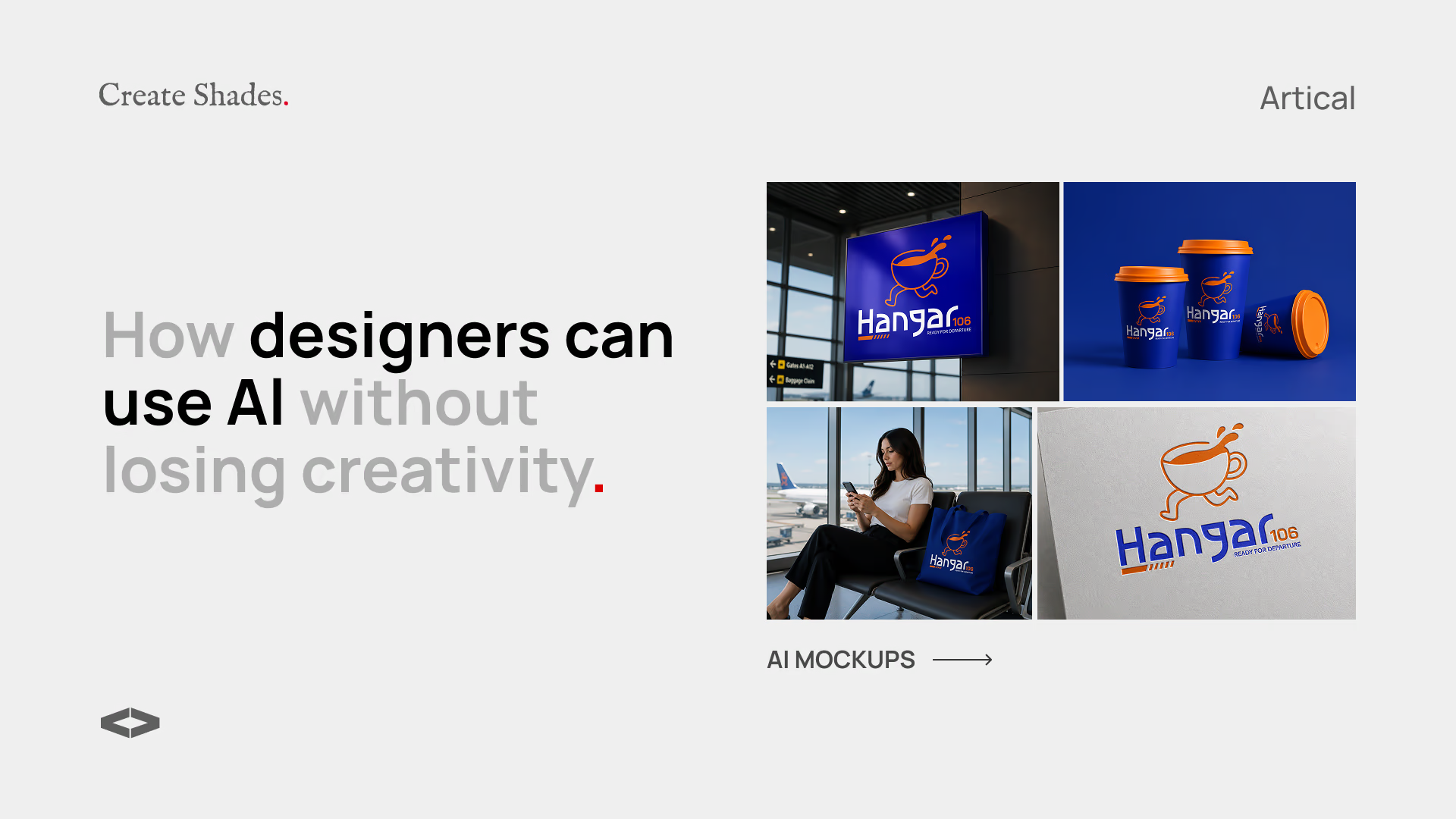
AI isn't replacing creativity—it's changing how creativity works.
As AI becomes part of everyday design workflows, many designers wonder whether creativity still holds the same value.
The answer is simple: AI can generate possibilities, but meaningful design still depends on human thinking, judgment, and storytelling.
The future belongs to designers who know how to use both.
Where AI adds value
AI is excellent at speeding up repetitive and time-consuming tasks.
From research and brainstorming to content creation and image editing, it helps designers spend less time on routine work and more time solving creative problems.
Used well, AI becomes a creative assistant rather than a creative replacement.
What still belongs to people
Great design is built on empathy, context, and strategic thinking.
Understanding a client’s goals, creating emotional connections, making creative decisions, and telling compelling stories are areas where human insight remains essential.
These qualities can’t simply be generated—they’re developed through observation and experience.
Finding the right balance
The strongest creative workflows combine human thinking with AI efficiency.
AI can accelerate exploration, generate ideas, and simplify production, while designers provide direction, originality, and critical thinking.
Technology supports the process, but creativity leads it.
Use AI responsibly
AI works best when it’s used to inspire rather than imitate.
Responsible use means respecting originality, avoiding direct copying, and using AI to expand ideas instead of replacing creative thinking.
The goal isn’t faster design—it’s better design.
Final Thoughts
AI will continue to evolve, but curiosity, storytelling, and creative judgment will remain timeless.
Designers who embrace AI as a tool—not a shortcut—will be better equipped to create thoughtful, original work in the years ahead.
if my work resonates with you,
I would love to hear your story.
If you’ve made it this far, chances are you’ve got an idea waiting to take shape. I’d love to hear about it.